





































No products in the cart.





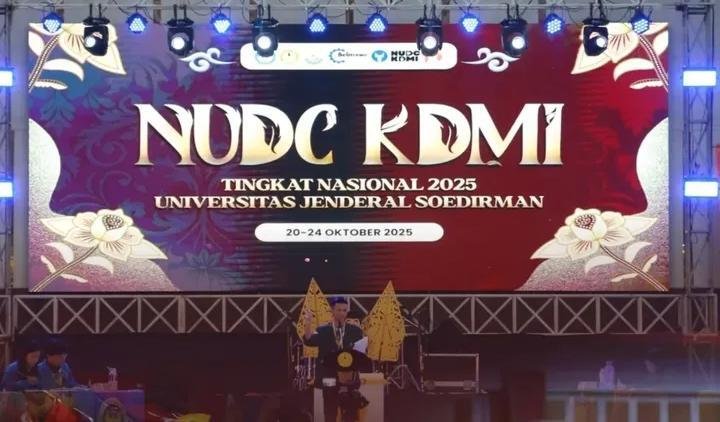
Final round NUDC KDMI 2025
In a country where freedom of expression is constitutionally guaranteed, a quiet erosion is taking place. The art of structured, logical, and persuasive debate is slowly fading among Indonesian university students. And with it, something more concerning is disappearing: the ability to articulate criticism, to see beyond surface level narratives, and to speak truth with evidence.
Debate is not just a competition. It is a form of discussion and freedom to criticize. It teaches you how to disagree without being disrespectful, how to challenge authority with arguments instead of emotions, and how to defend your position when someone more powerful pushes back. In a political climate where speaking out can carry risks, debate offers a safe framework to practice critical thinking and free speech.
But fewer young people are signing up for it.
Ask any former debater what they gained from the activity, and you will hear a list that goes far beyond trophies. Public speaking, certainly. Confidence, absolutely. But also something deeper: the ability to understand that every issue has two sides, and that truth is often found somewhere in the middle.
One alumnus of EDS (English Debating Society) UNNES, who asked to be identified by his nickname Andi, put it this way.
“Joining debate taught me to be professional and not judge anything at face value. Having debating analysis capabilities helped me achieve a total band score of 8.0 in IELTS,” he said.
That last part is important. Debate forces you to break down complex problems, see assumptions hiding beneath the surface, and respond to opposing views without crumbling. These are skills that help in exams, in job interviews, and in life.
But more than that, debate teaches you how to criticize. Not to complain, but to critique. To point out flaws in a policy, a system, or a leader’s reasoning while offering alternatives. In a country where students are often told to just follow orders and not make noise, debate gives permission to speak.
The data from university organizations across Java tells a worrying story. Interest in competitive debating has been dropping for years. Another former member of EDS UNNES, Dliya, explained the internal struggles.
“The biggest challenge I faced was member management, especially commitment and consistency in training. For most students, debate is still seen as an extracurricular activity, something secondary to their academics. Priorities get divided when assignments and deadlines come,” she said.
But there is more to it than just busy schedules.
Dliya also noticed a mismatch in expectations. Some students come in with high hopes, expecting fast paced competition and instant glory. Others come in with no experience at all and feel too intimidated to stay.
“There are students who already had debating experience from high school and expected university level debate to jump straight into intense practice. But our system starts from the basics. This mismatch made some feel the process was too slow. On the other hand, students with no experience struggled with low confidence and felt intimidated during sparring sessions. They compared themselves to others who spoke more fluently,” she explained.
Then there is the perception problem. Many students still believe that debate is only for those who are already “good” at speaking English or already have an exposure to the debating competition beforehand. That it is an elite activity, not for regular people. This mindset, despite efforts to make debate communities more open and supportive, remains stubbornly stuck.
Andi, who was active in 2018, pointed to another factor: the move to online competitions after the COVID-19 pandemic.
“Debating now is mostly held online. We don’t get the feel or the excitement of offline competitions. We also have less chances to network or get to know each other,” he said.
The energy of a live debate room, the nervousness before standing up, the eye contact with judges, the spontaneous reactions from an audience, the ability to make sudden small talk, meet new people and make new friends, all of that is lost when everything moves to Zoom and Google Meet. Debate becomes transactional. And transactional activities rarely inspire passion.
Here is the uncomfortable part that many do not want to say out loud. In Indonesia, expressing strong criticism, especially toward those in power, carries risks. Students have been arrested for speaking against government policies. Social media posts have led to police reports. The chilling effect is real.
But debate offers a solution. It teaches students how to frame criticism within logical structures, how to use evidence instead of insults, and how to challenge ideas without making personal attacks. In a functioning democracy, debate is not a threat. It is a release valve. It channels frustration into constructive argument.
When students stop debating, they do not stop having opinions. They just stop knowing how to express themselves properly. And that is when frustration turns into apathy, or worse, into rage that has no direction.
Dliya touched on this when asked how debate helped her personally.
“Even though my background is in public health, debate became an important tool for developing a broader perspective and sharper analytical skills. It helped me see how the world works from two sides, pros and cons,” she said.
That ability to see both sides is precisely what is missing in public discourse today. Social media algorithms reward outrage, not nuance. Being loud gets more likes than being logical. Debate is the antidote. But if no one practices it, the disease spreads.
Not everything is hopeless. Some universities are seeing small signs of recovery. New coaches are coming in. A few dedicated students are keeping the spirit alive. In 2025, one novice debater from a Central Java university managed to secure 4th place for Novice Best Speaker in a national competition. It was not a championship win, but it was proof that the potential is still there.
However, the future remains uncertain. Major national competitions like NUDC and KDMI for 2026 have not yet confirmed whether they will be held at all. Without competitions, the incentive to train and recruit new members drops significantly. It becomes a cycle: no tournaments, no motivation. No motivation, no new debaters. No new debaters, the art dies a little more.
Andi, when asked if he still has hope, did not hesitate.
“Yes, I do have high hopes debate communities could grow more from this point.”
But hope alone is not enough. What is needed is a recognition that debate is not a luxury. It is a necessity for any society that wants its young people to grow into citizens who can think, speak, and challenge without fear.
Indonesian youth are growing up in a world of information overload but critical thinking scarcity. They consume hours of content but spend almost no time learning how to argue properly. They have opinions, strong ones, but lack the structure to defend them when challenged. And when the time comes to speak against something wrong, many stay silent, not because they agree, but because they never learned how to say it right.
Debate is not a lost art yet. But it is fading. And if it disappears, what replaces it is not silence. It is noise. Angry, unfocused, easily manipulated noise.
That is a future worth fighting against. After all, everything should be debatable.
Syarat dan Ketentuan Penulisan di Siaran-Berita.com :
Setiap penulis setuju untuk bertanggung jawab atas berita, artikel, opini atau tulisan, foto, gambar, ilustrasi, apa pun yang mereka publikasikan di siaran-berita.com - Syarat dan Ketentuan - Kebijakan Privasi - Panduan Komunitas - Disclaimer




Kantor Pertanahan Kabupaten Simalungun mencatat hasil positif dalam pelaksanaan survei Indeks Kepuasan Masyarakat (IKM) dan Indeks Persepsi Korupsi (IPK) untuk...
Read moreDetails



Siaran-Berita.com adalah portal media berita online yang bersifat terbuka dan inklusif. Kami menyediakan wadah bagi masyarakat umum, penulis lepas, praktisi humas, hingga pengamat untuk berkontribusi dalam bentuk tulisan
Untuk memudahkan membaca berita terbaru di Siaran-berita.com segera download aplikasi khusus untuk Android di Google Play dan nikmati kemudahan membaca berita langsung dari gadget Anda