











































No products in the cart.






Figure 1. Main gate of Universitas Negeri Semarang
Universitas Negeri Semarang (UNNES) continues to increase its capacity for new student admissions in 2026, making it one of the universities with a relatively large intake. This policy reflects the university’s ongoing effort to expand access to higher education and provide more opportunities for prospective students across Indonesia.
According to the official UNNES website, the number of new student quotas increased from 11,150 in 2023 to 11,300 in 2024, and then to 11,420 in 2025. In 2026, the number rose significantly to 12,470, the largest increase since previous years. This upward trend shows UNNES’s consistent increase in student intake and indicates a stronger commitment to widening educational access.
However, the increasing number of students also raises concerns about whether the university’s facilities are able to accommodate this growth. As the student population continues to expand, the availability of classrooms, learning spaces, and supporting facilities becomes an important issue. Limited space and overcrowded classrooms may affect students’ comfort and concentration during the learning process.
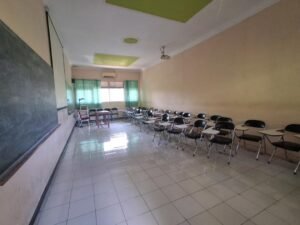
These concerns are also reflected in students’ perspectives. According to Hanita, an UNNES student, the increasing number of students has affected the quality of learning. “In my opinion, the growing number of students can make classrooms more crowded, which can limit interaction between lecturers and students,” she said.

She added that this condition makes the learning process less effective, as students tend to be more passive and may have a lower level of understanding of the material. Furthermore, she believes that UNNES is not fully prepared to handle the continuous increase in student numbers. “Facilities such as classrooms, desks, chairs, and smart TVs are still limited,” she explained.
Moreover, the increasing number of students may also affect traffic conditions around the campus. With more students commuting daily, the already limited road access near UNNES could become more congested, especially during peak hours. The narrow roads surrounding the campus have the potential to create bottlenecks, which may reduce convenience for both students and local residents.
On the other hand, the increasing number of students can also be seen as a positive development. It provides greater opportunities for high school graduates to pursue higher education and continue their studies at a reputable university such as UNNES.
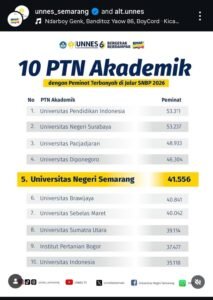
As reported on UNNES’ official Instagram account, the university was among the top 10 most selected state universities in the 2026 SNBP admission track, with a total of 41,556 applicants. With a larger student quota of 2,736 for the SNBP track, this also increases the chances for applicants to be accepted.
Overall, the steady increase in student intake at UNNES presents both challenges and opportunities. While it requires the university to ensure its facilities, learning environment, and infrastructure keep pace with the growing number of students, it also enables greater access to higher education.
Syarat dan Ketentuan Penulisan di Siaran-Berita.com :
Setiap penulis setuju untuk bertanggung jawab atas berita, artikel, opini atau tulisan, foto, gambar, ilustrasi, apa pun yang mereka publikasikan di siaran-berita.com - Syarat dan Ketentuan - Kebijakan Privasi - Panduan Komunitas - Disclaimer








Jakarta – Kementerian Agraria dan Tata Ruang/Badan Pertanahan Nasional (ATR/BPN) terus menghadirkan inovasi layanan untuk memberikan kemudahan dan kepastian kepada...
Read moreDetails




Siaran-Berita.com adalah portal media berita online yang bersifat terbuka dan inklusif. Kami menyediakan wadah bagi masyarakat umum, penulis lepas, praktisi humas, hingga pengamat untuk berkontribusi dalam bentuk tulisan
Untuk memudahkan membaca berita terbaru di Siaran-berita.com segera download aplikasi khusus untuk Android di Google Play dan nikmati kemudahan membaca berita langsung dari gadget Anda